



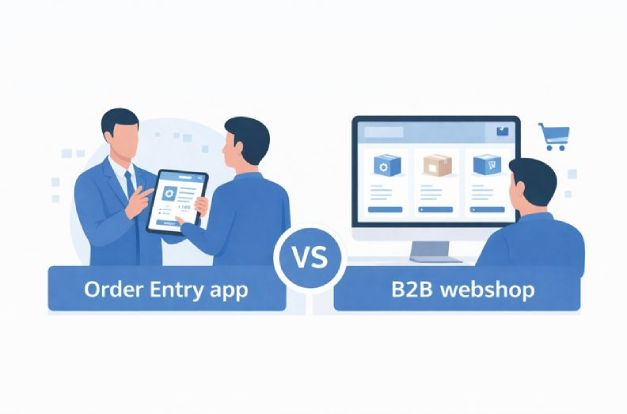
Order entry app versus B2B webshop: what is the difference and when do you choose which?
Handelsbedrijven digitaliseren hun orderprocessen in hoog tempo. Daarbij ontstaat vaak dezelfde vraag: kies je voor een Order Entry app of voor een B2B webshop? Beide oplossingen ondersteunen het plaatsen van bestellingen, maar zijn ontworpen voor verschillende processen, gebruikers en situaties binnen de supply chain.
In dit artikel lees je het inhoudelijke verschil, hoe beide oplossingen omgaan met productdata en koppelingen, en wanneer welke keuze logisch is.
Wat is een Order Entry app?
Een Order Entry app is vaak een interne digitale tool voor het efficiënt invoeren en verwerken van orders. De app wordt meestal gebruikt door accountmanagers, binnendienst of vertegenwoordigers die bestellingen plaatsen namens klanten. Er zijn ook aanbieders die een Order Entry app voor klanten hebben zodat zij gemakkelijk en snel overal kunnen inloggen en bestellen.
Kenmerken van een Order Entry app
- Gericht op snelheid en foutloos bestellen
- Zowel online als in sommige gevallen offline mogelijkheid tot bestellen
- Gebruikt actuele productdata, prijzen en klantafspraken
- Vaak beschikbaar op mobiel en tablet of zelf ook desktop
- Sterk gekoppeld aan ERP en PIM
- Ondersteunt complexe prijslijsten, staffels en contractafspraken
Een Order Entry app vervangt hiermee vaak de handmatige invoer via Excel, e-mail of telefoon en zorgt voor een gestroomlijnd orderproces zowel binnen als buiten de organisatie.
Wat is een B2B webshop?
Een B2B webshop is een extern digitaal kanaal waar zakelijke klanten zelfstandig bestellingen plaatsen. De webshop is gericht op selfservice en beschikbaarheid, vergelijkbaar met e-commerce, maar afgestemd op zakelijke logica.
Kenmerken van een B2B webshop
- Klanten plaatsen zelf hun orders
- Online beschikbaar
- Productdata, prijzen en assortiment per klant
- Koppelingen met ERP, PIM en logistiek
- Focus op klantbeleving en gemak
Een B2B webshop is vooral geschikt voor herhaalorders en klanten die zelfstandig willen bestellen zonder tussenkomst van sales.
De belangrijkste verschillen op een rij
Gebruiker en context:
- Order Entry app: intern en extern gebruik door medewerkers en klanten
- B2B webshop: extern gebruik door klanten
Complexiteit van orders:
- Order geschikt voor gestandaardiseerde en complexe orders, on- en offline gebruik, klantafspraken en uitzonderingen
- B2B webshop: geschikt voor gestandaardiseerde en herhaalbare orders
Procesdoel:
- Order Entry app: snelheid, controle, schaalbaarheid en foutreductie
- B2B webshop: klantbeleving en selfservice
Rol van productdata
In beide oplossingen is productdata cruciaal. Denk aan artikelinformatie, prijzen, beschikbaarheid en logistieke kenmerken. Het verschil zit vooral in presentatie en gebruik.Een Order Entry app toont data functioneel en compact. Een B2B webshop richt zich meer op navigatie, filtering en context voor de klant.
Wanneer kies je voor een Order Entry app?
Een Order Entry app is logisch wanneer:
- Orders worden geplaatst door sales of binnendienst
- Prijsafspraken per klant sterk verschillen
- Bestellingen complex of uitzonderlijk zijn
- Snelheid belangrijker is dan presentatie (gestandaardiseerde designs en geen maatwerk)
- Je wilt opschalen zonder extra personeel of zelfs personeel wilt vrijspelen
- Er veel telefonisch of persoonlijk klantcontact is
In sectoren zoals groothandel, industrie en technische distributie is dit vaak het geval.
Wanneer kies je voor een B2B webshop?
Een B2B webshop past beter wanneer:
- Klanten zelfstandig willen bestellen
- Het assortiment grotendeels gestandaardiseerd is
- Er veel herhaalorders zijn
- Digitale klantbeleving een grote rol speelt (geen standaard uiterlijk maar maatwerk designs)
Voor handelsbedrijven met een breed klantenbestand en repeterende orders is dit vaak een logische stap.
Een Order Entry app en B2B webshop combineren
In de praktijk zien we vaak dat veel organisaties al één van de twee oplossingen gebruiken, vaak is dit een B2B webshop. Een Order Entry app en B2B webshop kunnen elkaar echter heel goed versterken wanneer ze werken vanuit dezelfde data en processen.
Belangrijke randvoorwaarden daarbij:
- Eén centrale bron voor productdata, bijvoorbeeld een PIM
- Consistente koppelingen met ERP
- Duidelijke procesafspraken per kanaal
Zo kan sales werken met een Order Entry app terwijl klanten zelf bestellen via de B2B webshop, zonder dat data dubbel wordt beheerd. De hybride variant is een Order Entry app waarbij beide omgevingen beschikbaar zijn. Hierbij heb je een interne variant voor sales en vertegenwoordigers en een externe variant voor al je klanten.
De combi van beide zorgt voor een efficiëntieslag in de organisatie en het orderproces.
De rol van moderne data- en procesoplossingen
Oplossingen zoals PLGGR ondersteunen dit hybride model. PLGGR positioneert zich als platform voor productdata, orderprocessen en integraties binnen handelsbedrijven.
Binnen dit landschap zien we dat:
- De PLGGR | PIM fungeertals centrale productdatalaag
- De PLGGR | Order Entry App ondersteunt bij interne en externe orderverwerking met een Order Entry app voor vertegenwoordigers én klanten
- Koppelingen zorgen voor consistente data richting ERP en webshops
De kracht zit niet in het kanaal zelf, maar in de onderliggende datastromen en proceslogica.
Conclusie
Een Order Entry app en een B2B webshop lossen verschillende problemen op. De juiste keuze hangt af van je orderproces, klanten en mate van complexiteit.
Voorheen koos je één van beide systemen. Je kiest voor een Order Entry app wanneer controle, snelheid, standaardisatie en schaalbaarheid centraal staan. Kies voor een B2B webshop wanneer selfservice en maatwerk belangrijk zijn.
Maar met de komst van hybride varianten zoals de PLGGR | Order Entry app kan je tegenwoordig kiezen voor de combinatie, het beste van beide systemen. Ondersteund door een solide datafundament, wat dit de meest toekomstbestendige oplossing maakt voor handelsbedrijven die willen groeien en opschalen zonder meer fte aan te nemen.
Klaar voor de volgende stap? Ontdek de PLGGR Order Entry App →


