



How do I improve product data quality with a PIM system?
Every wholesaler recognizes it: product information scattered across dozens of Excel sheets, server folders, and the minds of experienced employees. The result? Incomplete descriptions, incorrect dimensions, and outdated prices on the website. This isn't just untidy; it directly impacts revenue. Customers who doubt the specifications simply won't hit the order button.
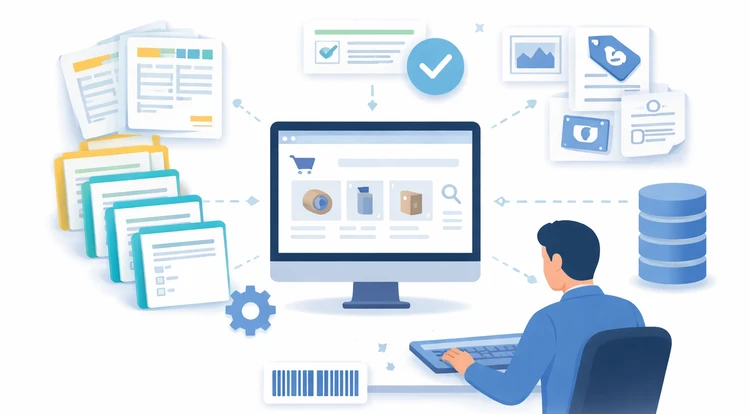
A PIM-system (Product Information Management System) is the ultimate solution to tame this chaos. But how do you specifically ensure that a system actually leads to better quality data?
At a glance: Optimizing data quality with a PIM-system
- Central Source: Create a single 'Source of Truth' and banish loose Excel lists from the organization.
- Data Enrichment: Use fixed fields and structures so data remains consistent and complete
- Validation & Workflows: Set rules so a product only goes 'live' when all mandatory fields are filled.
- Digital Assets: Link images, manuals, and certificates directly to the correct product.
- Efficiency: Use bulk-edit features to correct or translate thousands of items simultaneously.
Why data quality is the bottleneck of your growth
In modern commerce, your product data is your digital storefront. If the data in your webshop or catalog is incorrect, it’s like a physical store where price tags are missing or products are in the wrong boxes. Poor data leads to:
- High return rates: Customers don't receive what they expected
- Customer Service overload: The back office spends all day answering questions that should have been on the site.
- Poor searchability: Google doesn't understand your assortment if specifications are missing.
The 3 pillars of improvement through a PIM
1. Standardization and Structure
Without a PIM, everyone enters data in their own way. One colleague writes 'Black', another 'Blk', and a third 'Anthracite'. A PIM forces structure. You work with fixed attributes and selection lists. This ensures your data is always uniform, making webshop filters far more effective.
2. Validation: The 'Gatekeeper' of your data
A powerful part of a PIM system is validation. You can set a product's status to'Complete' only when, for example, the EAN code, a main image, and adescription are present. This prevents 'half-finished' work from accidentallybeing sent to customers or marketplaces.
3. Efficiency through oversight
In Excel,it's a nightmare to adjust 500 products at once. In a PIM, you do this with afew clicks. Does a brand name need to change, or do you want to categorize anew product line? Bulk-edit functions keep your data up-to-date withoutrequiring hundreds of hours of manual labor.
The role of AI in data enrichment
At PLGGR, we believe technology should do the heavy lifting. Our AI integrations within the PIM solution can help automatically generate commercial copy based on technical specifications. Do you only have a list of features from the supplier? The AI translates this into smooth, sales-oriented text in multiple languages. This significantly accelerates your time-to-market.
Conclusion: From data to sales power
Improving your product data is not a one-time project but a continuous process. A PIM-system provides the foundation and tools to make this process manageable. The result is a professional appearance, fewer errors, and ultimately higher conversion rates.


